Canadian schools (Canada Eh?)
A high quality Canadian education
Schools in Canada offer a high quality education with internationally recognized diplomas granted by provincial ministries of education. Boarding schools in Canada offer highly trained and educated teachers who are available to help you at all hours if you are having troubles in your studies or if you need to be further challenged.
Universities from across Canada, the United States, the United Kingdom and around the world recognize Canadian diplomas and accept thousands of Canadian students every year. Many boarding schools also offer the International Baccalaureate (IB) programme, a challenging academic designation that is internationally recognized and makes transitioning to other IB schools or universities easier.
The Canadian cultural experience
Canadians have welcomed millions of people from around the world, creating one of the most multicultural societies in existence. Different cultures are embraced and shared and religious freedoms are guaranteed. Canada also has two official languages: French and English. Both languages are spoken across the country but English is spoken by the majority of residents in all provinces except Quebec (where French is spoken by the majority of people). There are French- and English-language boarding schools, but most boarding schools offer excellent teaching in both official Canadian languages.
Canada and the great outdoors
Canada is a place with an abundance of land and a small population. If you love nature, the wilderness and have a sense of adventure then attending a Canadian boarding school outside a major city could be just for you. Many boarding school campuses are beside water and offer rowing, sailing, kayaking and canoeing. They also provide a peaceful and calm environment where you can live with your friends year-round. Yes there is snow, and sometimes lots of it, but our mountains, lakes, rivers, forests and open land make winter fun.
Canada has major cities and not just forests
Vancouver is Canada's third largest city and is nestled between the Rocky Mountains and the Pacific Ocean. Besides its beauty, Vancouver is also one of the warmest places in Canada year-round. English is mostly spoken in Vancouver but large Chinese and Indian populations exist.
Toronto is located on Lake Ontario and is Canada's largest city. Toronto is a world within a city and has many neighbourhoods made of different cultural groups. English is mostly spoken in Toronto, but many other languages such as Mandarin, Cantonese, French, Spanish, Portuguese and Italian are spoken throughout.
Ottawa is Canada's capital city and home to museums, parliament, Canadian and foreign government offices and embassies, the Rideau Canal and ByWard market. Ottawa is a bilingual city and is on the provincial borders of Ontario and Quebec along the Ottawa River.
Montreal is the second largest city in Canada and the largest French-speaking city in North America. It is also one of the oldest cities in North America and features large English and French-speaking areas of the city. Montreal is a city surrounded by water and features a mountain, Mont Royal, within the heart of the city.
Halifax is the largest city on the east coast of Canada. It is large enough so there is plenty to do but small enough to easily move around and get to know the community. Located on the Atlantic Ocean, it has a strong maritime and sailing history. English is mostly spoken in Halifax and throughout the province of Nova Scotia.
How to apply to boarding schools
Every boarding school will have its own application process and unique documents to complete. Many schools will also require an application fee. It is best to visit your preferred schools' web sites to learn more about their application process and fees. Interviews are often conducted in person with either the student or someone from the boarding school travelling; otherwise interviews are conducted through Skype. It is recommended that students wanting to study in Canada apply to a few schools to increase the chance of being accepted to a school.
Study permits and visas
Foreign students will need to apply for a study permit from the Government of Canada after receiving acceptance at a Canadian boarding school. Some students, depending on the country in which they live, will also require a temporary resident visa that will be processed along with the study permit application. This application requires a $125 CAD processing fee that is not refunded if an application is refused or withdrawn.
Applications can be made through Canadian visa offices around the world. Students will need to prove they have been accepted at a Canadian boarding school; prove their identity through passports or travel documents; prove they can afford tuition, boarding fees and living expenses while in Canada; and provide a written explanation of why they require a study permit. The Government of Canada offers more information on the documents you will be required to bring.
 |
Trinity College School 55 Deblaquire Street North, Port Hope, Ontario, L1A 4K7 Type: Liberal Arts |
 |
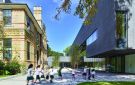
Havergal College 1451 Avenue Road, Toronto, Ontario, M5N 2H9 Type: Liberal Arts |
 |
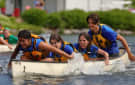
Branksome Hall 10 Elm Avenue, Toronto, Ontario, M4W 1N4 Type: Liberal Arts, International Baccalaureate |
 |
Lakefield College School 4391 County Road 29, Lakefield, Ontario, K0L 2H0 Type: Liberal Arts |
 |
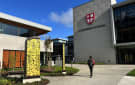
Upper Canada College 200 Lonsdale Road, Toronto, Ontario, M4V 1W6 Type: Liberal Arts, International Baccalaureate |
 |
St. George's School 4175 West 29th Avenue, Vancouver, British Columbia, V6S 1V1 Type: Traditional |
 |
Appleby College 540 Lakeshore Road West, Oakville, Ontario, L6K 3P1 Type: Liberal Arts |
 |
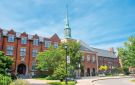
Niagara Christian Collegiate 2619 Niagara Parkway, Fort Erie, Ontario, L2A 5M4 Type: Traditional |
 |
Ridley College 2 Ridley Road, St. Catharines, Ontario, L2R 7C3 Type: Progressive, International Baccalaureate |
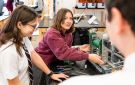 |
The Bishop Strachan School 298 Lonsdale Road, Toronto, Ontario, M4V 1X2 Type: Progressive |
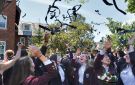 |
Ashbury College 362 Mariposa Avenue, Ottawa, Ontario, K1M 0T3 Type: Traditional, International Baccalaureate |
 |
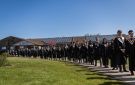
St. John's Academy Shawnigan Lake 2371 Shawnigan Lake Road, Shawingan Lake, British Columbia, V8H 2H1 Type: Progressive, International Baccalaureate |
 |
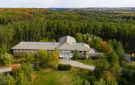
St. John's-Kilmarnock School 2201 Shantz Station Road, Waterloo Region (Breslau), Ontario, N0B 1M0 Type: Progressive, International Baccalaureate |
 |
The Hill Academy 20490 Porterfield Road, Caledon, Ontario, L7K1T2 Type: Traditional |
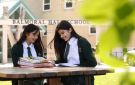 |
Balmoral Hall School 630 Westminster Avenue, Winnipeg, Manitoba, R3C 3S1 Type: Progressive, International Baccalaureate |
 |
Nancy Campbell Academy 45 Waterloo St S, Stratford, Ontario, N5A 4A8 Type: Liberal Arts |
 |
Applewood Academy for Progressive Learning 72 Orchard Dr., Belleville, Ontario, K8P 2K7 Type: Progressive |
 |
Erindale Academy 1576 Dundas Street West, Mississauga, Ontario, L5C 1E5 Type: Progressive, International Baccalaureate |
 |
Fort Erie International Academy 7 Tait Ave, Fort Erie, Ontario, L2A 0G1 Type: Liberal Arts |
 |
McDonald International Academy 920 Yonge Street, 2nd Floor, Toronto, Ontario, M4W 3C7 Type: Traditional |
 |
J. Addison School 2 Valleywood Drive, Markham, Ontario, L3R 8H3 Type: Liberal Arts |
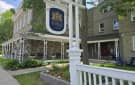 |
Fulford Academy 118 Main Street, Merrickville, Ontario, K0G1N0 Type: Progressive |
 |
St. Andrew's College 15800 Yonge Street, Aurora, Ontario, L4G 3H7 Type: Traditional |
 |
Brookes Westshore 1939 Sooke Rd, Victoria, British Columbia, V9B 1W2 Type: Progressive, International Baccalaureate |
 |
Stanstead College 450 Dufferin Street, Stanstead, Quebec, J0B 3E0 Type: Traditional |
 |
King's-Edgehill School 33 King's-Edgehill Lane, Windsor, Nova Scotia, B0N 2T0 Type: Traditional, International Baccalaureate |
 |
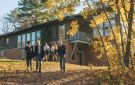
Bishop's College School 80 chemin Moulton Hill, Sherbrooke, Quebec, J1M 1Z8 Type: Traditional, International Baccalaureate |
 |
Rosseau Lake College 1967 Bright Street, Rosseau, Ontario, P0C 1J0 Type: Progressive |
 |
Bronte College 88 Bronte College Court, Mississauga, Ontario, L5B 1M9 Type: Progressive |
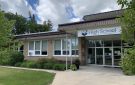 |
Rosthern Junior College High School 410 6th Ave, Rosthern, Saskatchewan, S0K 3R0 Type: Progressive |
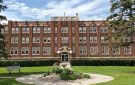 |
Luther College High School 1500 Royal Street, Regina, Saskatchewan, S4T 5A5 Type: Liberal Arts, International Baccalaureate |
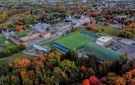 |
College Bourget 65 Rue Saint-Pierre, Rigaud, Quebec, J0P 1P0 Type: Traditional |
 |
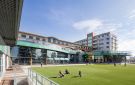
Trafalgar Castle School 401 Reynolds Street, Whitby, Ontario, L1N 3W9 Type: Liberal Arts, International Baccalaureate Candidate |
 |
Bodwell High School 955 Harbourside Drive, North Vancouver, British Columbia, V7P 3S4 Type: Progressive, International Baccalaureate |
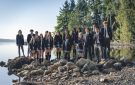 |
Brentwood College School 2735 Mount Baker Road, Mill Bay, British Columbia, V0R 2P1 Type: Liberal Arts |
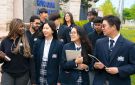 |
Royal Crown School 4620 Finch Ave East, Scarborough, Ontario, M1S 4G2 Type: Progressive, Reggio Emilia |
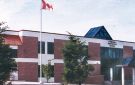 |
Trillium School 4277 14th Avenue, Markham, Ontario, L3R 0J2 Type: Traditional, Montessori |
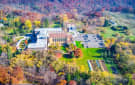 |
Laureate College 1921 Snake Road, Burlington, Ontario, L7P 4Y2 Type: Progressive |
 |
Kells Academy 6865 De Maisonneuve West/6645 De Maisonneuve West, Montreal, Quebec, H4B 1T1/H4B 2Y3 Type: Traditional |
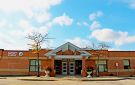 |
NOIC Academy 50 Featherstone Ave, Markham, Ontario, L3S 2H4 Type: Traditional, International Baccalaureate |
 |
Nile Academy 5 Blue Haven Cresent, Toronto, Ontario, M9M 1W6 Type: Progressive, Montessori |
 |
Albert College 160 Dundas Street West, Belleville, Ontario, K8P 1A6 Type: Traditional |
 |
Athol Murray College of Notre Dame P.O. Box 100, Wilcox, Saskatchewan, S0G 5E0 Type: Reggio Emilia |
 |
Pickering College 16945 Bayview Avenue, Newmarket, Ontario, L3Y 4X2 Type: Progressive |
 |
Agate Private School 43 Chaplin Ave, St. Catharines, Ontario, L2R 2E4 Type: Progressive |
 |
Rothesay Netherwood School 40 College Hill Road, Rothesay, New Brunswick, E2E 5H1 Type: Liberal Arts, International Baccalaureate |
 |
Unisus School 7808 Pierre Drive, Summerland, British Columbia, V0H 1Z2 Type: Progressive, International Baccalaureate |
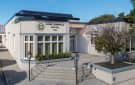 |
Globe Cambridge School 20 Upjohn Road, North York, Ontario, M3B 2V9 Type: Progressive, International Baccalaureate |
 |
North Star Academy Laval 950 Élodie-Boucher, Laval, Quebec, H7W 0C6 Type: Traditional |

|
Disclaimer: Information presented on this page may be paid advertising provided by the advertisers [schools/camps/programs] and is not warranted or guaranteed by OurKids.net or its associated websites. See Terms and Conditions and Privacy Policy. Our Kids ™ © 2015 All right reserved. |  |